
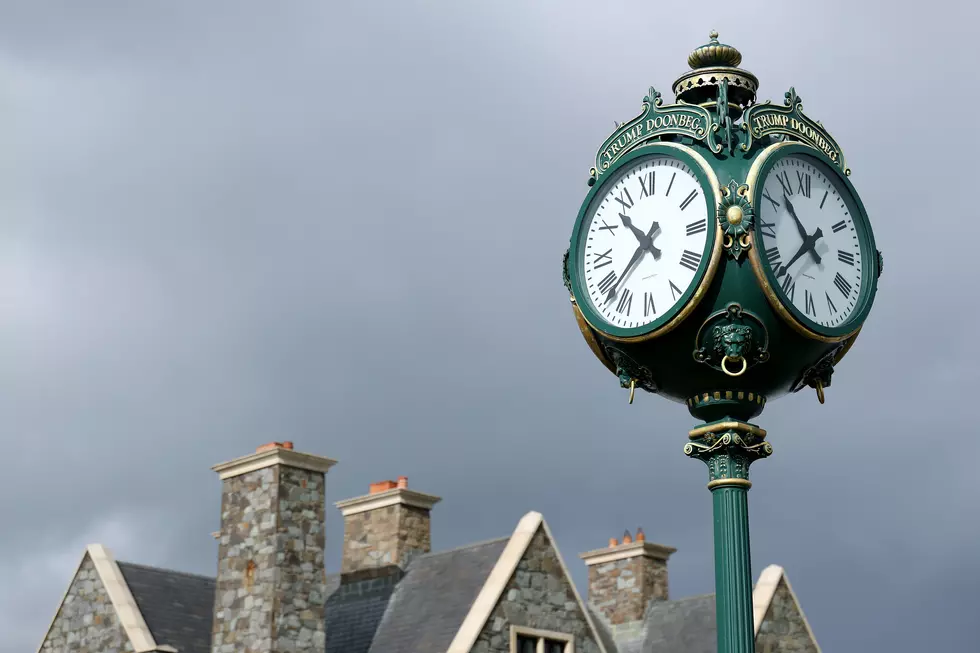
Government Makes Decision on ‘Clocks Falling Back’ This Year
(KMDL-FM) There is a time-honored tradition that our elected officials in Washington, D.C., use every year to make it appear as though they are doing something. That something is actually nothing.
And since the United States Senate has done nothing with the Sunshine Protection Act, we can tell you, with good authority, that the clocks will go back one hour this year on the earliest possible date they could do so.
If you've ever wondered how we, the government, arrived at the dates that we move the clocks forward or backward depending on the time of year, it all comes down to the Energy Policy Act of 2005. In that act, specific days were confirmed for when we would "spring forward" and when we would "fall back".
Hasn't Permanent Daylight Saving Time Already Been Approved?
The Sunshine Protection Act, which has been passed by the United States House of Representatives, would have ended the practice of biannual clock changing. The plan was to "set it and forget it," if we may borrow from TV spokesman Ron Popeil.
READ MORE: Louisiana's Largest Pumpkin Patch - Perfect Fall Getaway
The United States Senate did not act on the Sunshine Protection Act, although technically they still could. President Trump, who supports the act, has made phone calls to key Senators in hopes of moving the legislation forward, but many members of Congress are not in Washington at this time. They are at home preparing for the November midterm election.

In 2026, What Day Do The Clocks Fall Back One Hour in the Fall?
The current clock change standard calls for the clocks to move forward by one hour on the first Sunday in April and then move back by one hour on the last Sunday in October. For the year 2026, that Sunday will be November 1st.
So, we will set the clocks back one hour on Halloween night. Technically, early Sunday morning, after midnight on Halloween. This means trick-or-treat fans won't get the extra hour of darkness for candy grabbing. But it should still be dark enough for things to go bump in the night even if we don't change the clocks.
READ MORE: Haunted Carwash Returns to Lafayette for Halloween 2026
Louisiana is one of 19 states that have legislation in the queue waiting on the federal government to make a decision on permanent Daylight Saving Time. So, when the feds do make it happen, it will, by default, happen here, if it ever happens.
Speaking of other things that don't make a lot of sense.
8 Times Common Sense Was Not Present in Acadiana
Gallery Credit: Bruce Mikells